

Muckish [An Mhucais]
Good walks are even better shared.
C0028 : Muckish Triangulation Pillar [detail]
Rossographer Photo source
Overview
Muckish is a distinctive flat-topped, 667.1 m quartzite mountain in the Derryveagh range, County Donegal. The southern Grotto approach and the steeper northern Miner’s Path are separate mountain routes; both need careful navigation on the broad, rocky plateau.
Muckish [An Mhucais]
Overview and summit
Muckish is a flat-topped, 667.1 m mountain in County Donegal’s Derryveagh range. The recorded summit is the trig point on a modern cairn at C 00451 28711. The large ancient cairn is 375 m southwest at C 00156 28478; the cross is 200 m east of the summit. They are separate landmarks.
Return routes
The southern Grotto approach starts on the R256 at B998268 and returns through the same southwest entry to the plateau. Hiking Donegal describes a 4.9 km return with 430 m ascent, taking about 3.5 hours. It is less technical than the northern route but includes boggy, steep and partly pathless ground.
The Miner’s Path starts at the northern road end near B998292. It climbs through old workings, rock steps and the quarry to the plateau, then returns by the same path. Get Lost Mountaineering gives about 3 km and 3–4 hours for its full return. This is an exposed scrambling route with loose ground and dangerous wrong turns, unsuitable for inexperienced walkers or young children. The lower railway loops are separate walks and do not reach the summit.
Navigation and safety
Identify and record the exact plateau entry on ascent. In cloud, relocate it carefully before descending. Do not take a direct line off the plateau or follow an uncertain gully. Loose material on the steep quarry terrain can fall or be dislodged; take care of walkers below. Mist, wind, rain, snow and ice can make both routes substantially harder. Carry mountain navigation equipment and allow for the full return before darkness.
Access
Use the small parking areas for the chosen approach without obstructing the road, gates or workings. The northern access lane is narrow and rough near its end. Follow current local notices; a route description does not establish a right of way. No toilets are listed at either trailhead in the local guide. Carry food and water. Buses serve nearby villages, but an onward journey and return pickup to the trailhead need separate planning.
Landscape and history
Muckish is mainly Ards Quartzite, part of the ancient Dalradian succession. Weathering produced pure quartz sand, extracted on the northern side for glass-making until the mid-1950s. The summit carries rubble and sparse alpine vegetation within Muckish Mountain SAC. Avoid disturbing its fragile ground.
An Mhucais is commonly rendered as ‘the pig’s back’, referring to the mountain’s outline. Nearby mountains include Crocknalaragagh, Aghla Beg and Aghla More. In clear weather the plateau overlooks the Donegal coast and the Derryveagh mountains, including Errigal.
Explore routes near Muckish [An Mhucais]
Walks starting near this hill. Open a route to check its map, distance and full itinerary.
Route planning notes
These notes describe possible approaches. Check a route's map and access information when planning your walk.
Muckish via the Miner’s Path (out and back)
Start at the small northern road-end parking area near B998292. Beyond the old loading bays, turn right, cross the stream and follow the winding miners’ path up rock steps to the quarry. Continue onto the plateau, record the exact point of entry and reach the summit trig. Return to that same entry and carefully reverse the whole route to the car. This is about 3 km return; allow 3–4 hours. Exposed scrambling, loose ground and misleading side paths require experience. If uncertain, stop and relocate rather than descend a gully.
Muckish from the Grotto at Muckish Gap (return)
Start beside the roadside grotto on the R256 at B998268. Cross boggy ground towards the shallow gap and stream-side approach, then turn uphill onto the southwest slopes. Use the rocky southwest entry to gain the plateau and continue to the summit trig. Return through that same entry and retrace the approach to the grotto. Hiking Donegal gives 4.9 km and 430 m ascent for the full return, taking about 3.5 hours. This is the less technical approach, but intermittent paths, steep slopes and sudden cloud still demand mountain navigation.
Make a day of it, together
Find someone to share the walk with, or organise a day out along a route you like.
Photo Gallery
View all Photo could not load
C0028 : Muckish Triangulation Pillar [detail]
Rossographer
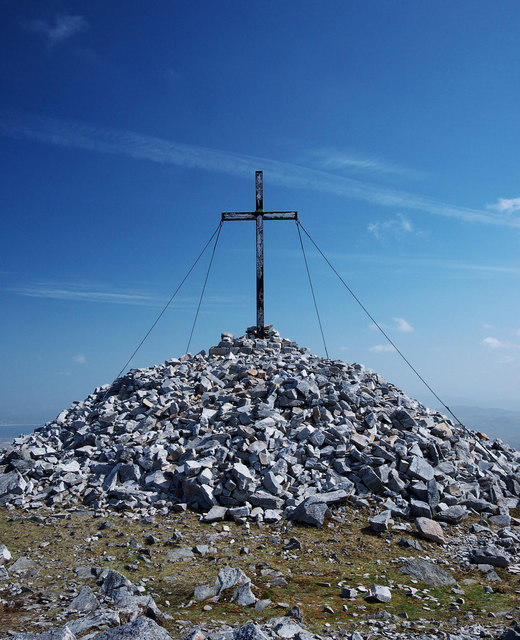 Photo could not load
C0028 : Cross, Muckish
Rossographer
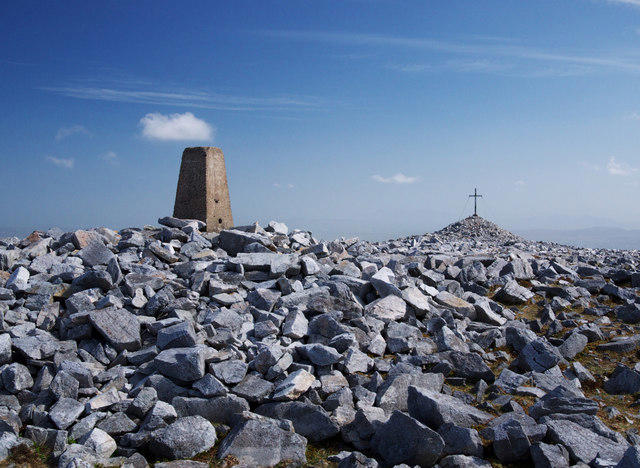 Photo could not load
C0028 : Trig pillar and cross, Muckish
Rossographer
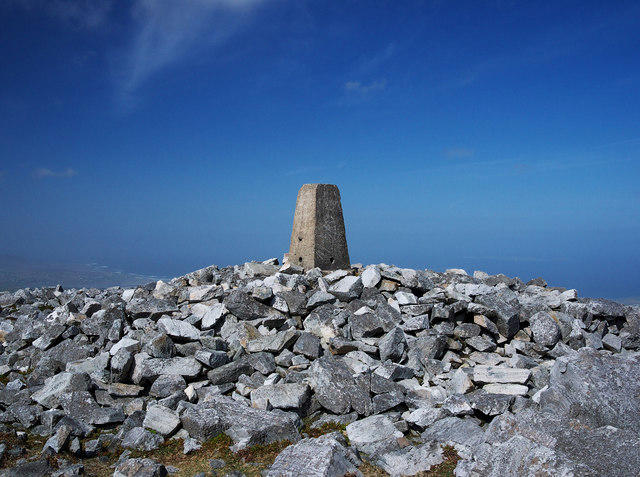 Photo could not load
C0028 : Muckish Triangulation Pillar
Rossographer
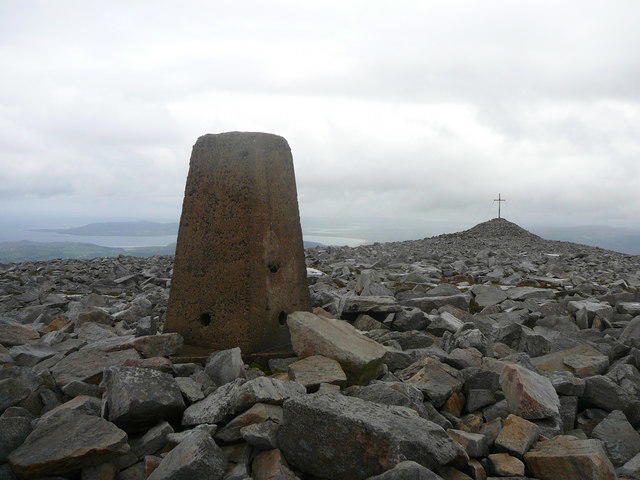 Photo could not load
C0028 : The trig point & iron cross on Muckish Mountain
Colin Park
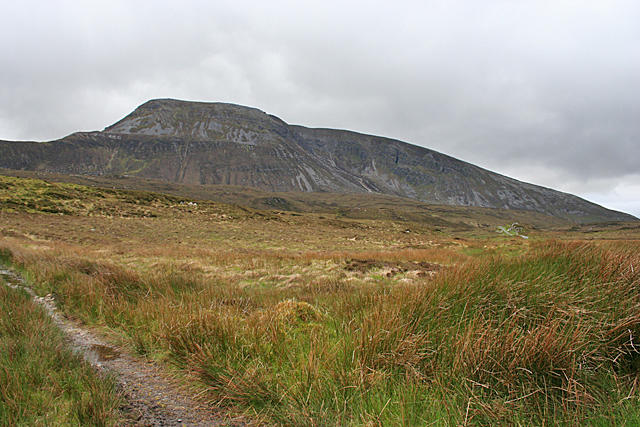 Photo could not load
C0028 : Muckish Mountain
Anne Burgess
Hill facts and local notes
Classifications
Elevation
667m
2,189 ft
Prominence
484m
Coordinates
55.1057, -7.9937
C004287
OS Map
02
At the Summit
The highest point is the trig on a modern cairn at C 00451 28711. The large ancient cairn lies 375 m southwest at C 00156 28478, and the cross is 200 m east of the summit. Neither is a substitute for the recorded highest point.
Terrain & Geology
Muckish is mainly the Ards Quartzite Formation, within the Precambrian Dalradian succession. Frost-shattered scree skirts the mountain. Locally the quartzite disaggregated into very pure quartz sand, formerly quarried for glass-making on its northern side.
Views & Scenery
In clear weather the plateau gives views across the Donegal coast and towards Errigal and the surrounding Derryveagh mountains.
History & Heritage
Name Origin
An Mhucais is the validated Irish name; muc means pig. The name is commonly rendered as “the pig’s back”, referring to the mountain’s distinctive shape.
Historical Significance
Quartz sand was extracted from the northern slopes for glass manufacture until the mid-1950s. Surviving workings and machinery explain the Miner’s Path name. The large cross on the plateau was placed to mark the millennium; it does not mark the highest point.
Getting There & Facilities
Parking
For the southern approach, use the small roadside parking near the grotto on the R256 at B998268. For the Miner’s Path, use the small northern road-end area near B998292, reached by a narrow lane off the N56 north of Creeslough. Stop before the lane deteriorates into rough track; Hiking Donegal advises stopping about 200 m before the path. Keep roads, gates and quarry access clear, and follow local notices. These descriptions do not guarantee current availability or establish parking permission.
Public Transport
Gallagher Coaches lists stops in Creeslough, Dunfanaghy and Falcarragh. Arrange a separate onward journey to the chosen mountain trailhead and a return pickup; no direct trailhead service has been verified. Check the operator’s current timetable before travelling.
Nearby Facilities
The local walking guide lists small parking areas but no toilets at either summit trailhead. Carry drinking water, food and suitable mountain equipment.
Safety Information
Known Hazards
- The Miner’s Path has exposed rock steps, very steep narrow sections and loose ground; a wrong turn can lead into dangerous cliffs or gullies. It is unsuitable for inexperienced walkers or young children.
- Loose material on steep quarry ground can fall or be dislodged. Avoid knocking stones onto anyone below and stay clear of unstable workings.
- Low cloud can obscure the broad plateau and its steep edges. Record the ascent entry and relocate it before descending; do not descend directly towards the car or follow an uncertain gully.
- The Grotto route is less technical but still crosses boggy, steep and partly pathless ground. Carry a map and compass and the skills to use them.
Seasonal Hazards
Wet rock, strong wind and poor visibility increase the difficulty. Snow or ice can make the steep sections and descent much more serious. Check the mountain forecast, choose conditions within your experience and leave enough daylight for the return.
General Safety Tips
- Check weather conditions before setting out
- Carry appropriate clothing and equipment
- Let someone know your planned route
- Take a map, compass, and GPS device
- Carry emergency supplies: food, water, first aid kit, torch
Hills
Some common questions about the hills answered
Are there group walks up Muckish [An Mhucais]?
Many walkers use Walkmates to join or organise walks with others. You can check for group walks around Muckish [An Mhucais] through the maps
Are there other walkers around Muckish [An Mhucais]?
Activity varies by location and time, but Walkmates lets you see whether others have shared walks or shown interest in this area. Find other people through the walking friends search walking friends for Muckish [An Mhucais] search or of course create your own walk for Muckish [An Mhucais]
Can I organise a walk to Muckish [An Mhucais]?
Yes. If there aren’t any walks listed already, you can create a walk and make it available for others to join.
If you're signed up to Walkmates, you can create a walk to Muckish [An Mhucais].
How do I find a walk up this hill?
There are often multiple ways to walk this hill, depending on experience and route preference. Walkmates helps you explore walks and routes that others have shared.
Can I suggest a new route up Muckish [An Mhucais]?
Yes. You can suggest or create routes to share with others. Walkmates focuses on the social side of walking, so routes are used to help people organise walks and explore areas together, rather than as detailed navigation tools or route libraries.
Other uses really appreciate knowledgeable walkers sharing their routes. Share your favourite route to Muckish [An Mhucais] here
The is an error or something incorrect about this hill. How do I let you know?
We always strive to keep the information on Walkmates as accurate as possible. If you find an error, please let us know through the contact form and we'll aim to correct it as quickly as possible
Community Discussion
Comments
Location
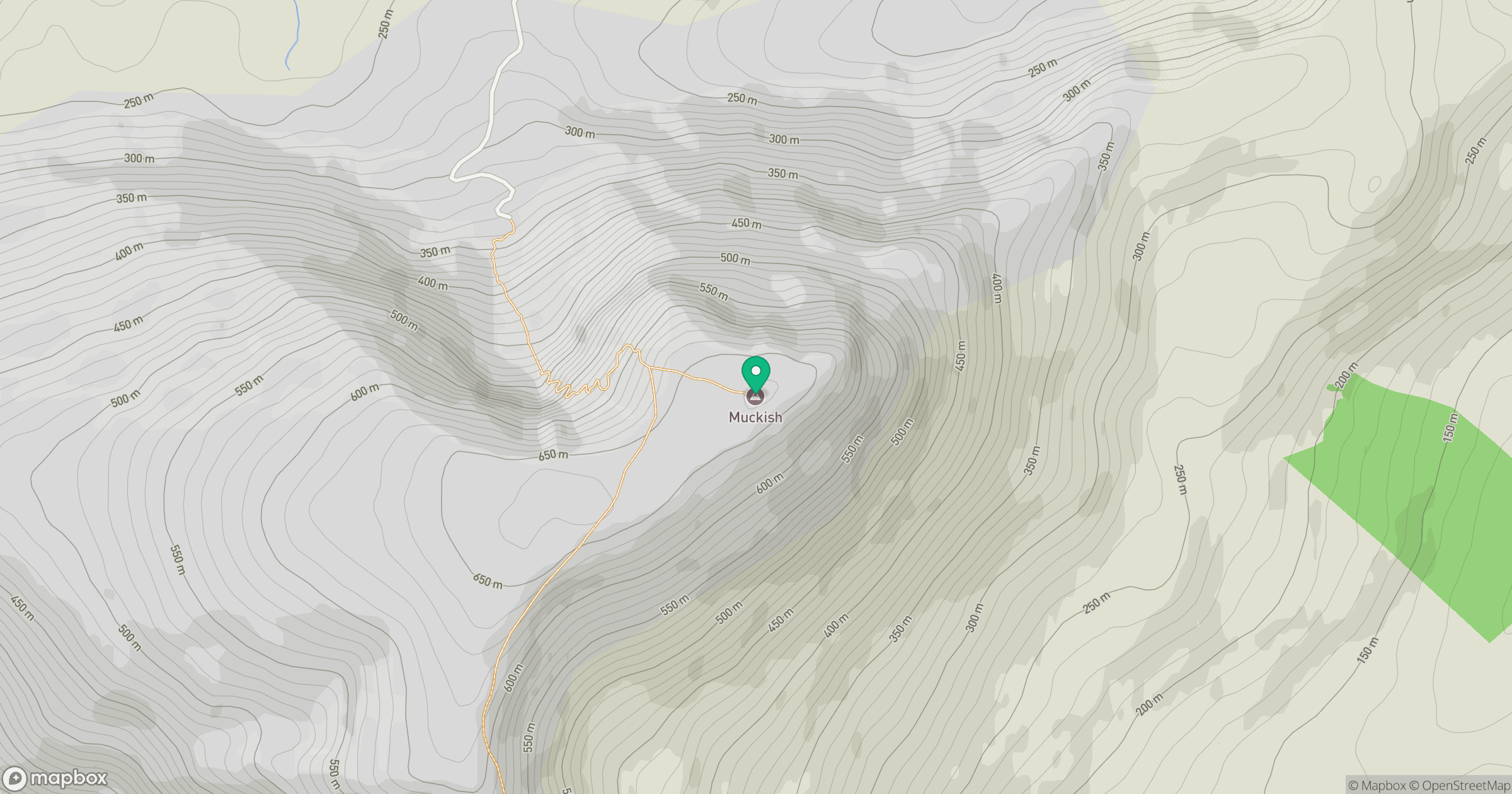
Grid reference: C004287
View on OpenStreetMapOpens a map in a new tab, centred on the hill.
No comments yet. Be the first.